.svg)
Soft Skills in the Workplace: Why They Matter and How to Build Them
Soft Skills in the Workplace: Why They Matter and How to Build Them
The work that shapes a career rarely appears as a neat task on a to-do list.
It happens when a deadline moves, a customer is frustrated, two colleagues disagree, or a manager has to explain an unpopular decision. Technical knowledge helps in each situation. But it is communication, judgment, empathy, adaptability, and self-awareness that determine what happens next.
That is why soft skills in the workplace matter. They turn knowledge into useful action and make it easier for people to work through uncertainty together. As AI changes how many technical tasks are completed, these deeply human capabilities are becoming more valuable, not less.
What are soft skills?
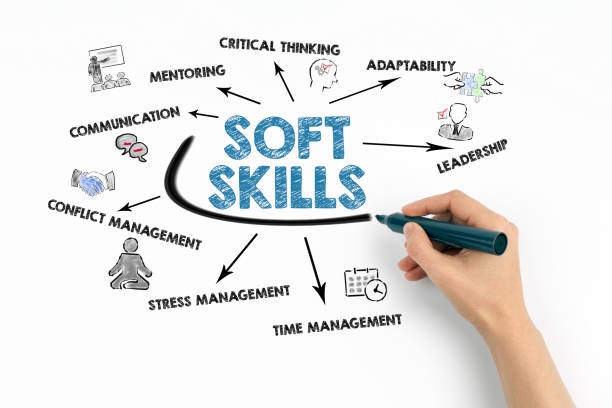
Soft skills are the interpersonal, thinking, and self-management abilities that shape how a person works. Communication, collaboration, adaptability, emotional intelligence, critical thinking, and accountability are common examples.
The term can be misleading. These skills are not vague, easy, or optional. A better way to think about them is as human skills. They show up in decisions and interactions that have real consequences.
Some organizations group these visible patterns of behavior under the term behavioral competencies. Whatever label is used, the useful test is the same: can people describe what the skill looks like in action and help someone improve it?
Consider the difference between knowing how to prepare a project plan and being able to bring a group of people along with it. The first requires technical knowledge. The second also requires listening, influence, clear communication, and the ability to handle disagreement. Most meaningful work needs both.
Soft skills vs hard skills: What is the difference?
Hard skills are the specialized abilities needed to perform a particular task. A financial analyst may need financial modeling. A developer may need to write and test code. A designer may need to use prototyping software.
Soft skills influence how those abilities are applied. Can the analyst explain a risk without burying the point? Can the developer challenge a weak idea without making the discussion personal? Can the designer hear difficult feedback and improve the work?
The distinction is useful, but the two categories are not competitors. Hard skills help a person do the task. Soft skills help them do it with and for other people.
Why do soft skills matter more now?
Work is changing quickly. LinkedIn estimates that 70% of the skills used in most jobs will change by 2030, with AI acting as a major catalyst. The World Economic Forum's Future of Jobs Report 2025 also found that employers continue to rank human capabilities highly. Analytical thinking, resilience, leadership, creative thinking, motivation, self-awareness, empathy, and active listening all appear among its core skills.
The message is not that technical expertise no longer matters. It is that expertise has a shorter shelf life when tools and workflows change quickly. People need to learn, explain, question, coordinate, and adapt while the work itself is moving.
Soft skills create value in four practical ways.
1. They make technical ability usable
A strong idea has little impact if nobody understands it. A correct analysis can still lead to a poor decision if its assumptions are not communicated. Soft skills help people translate expertise into action that others can trust and use.
2. They reduce the hidden cost of friction
Unclear ownership, avoidable conflict, defensive feedback, and poorly run meetings all consume time. Good communication and collaboration do not eliminate disagreement. They make disagreement productive. These practical teamwork habits help teams turn that principle into everyday behavior.
3. They help people adapt when the playbook changes
New technology can make yesterday's process obsolete. Adaptable employees stay curious, test new approaches, and ask for help before a small problem becomes a large one. Resilience helps them recover when the first attempt fails.
4. They build trust
People trust colleagues who listen carefully, keep commitments, explain their reasoning, and own mistakes. Trust speeds up coordination. It also makes candid feedback and responsible experimentation possible.
Nine essential soft skills in the workplace
Lists of soft skills can become abstract very quickly. The more useful question is: what does each skill look like in a normal workday?
1. Communication
Communication skills help a person make an idea clear to a specific audience. They include writing, speaking, presenting, and choosing the right amount of detail.
What it looks like: A project lead explains the decision, the reason behind it, the owner, and the next step. People leave the conversation knowing what happens now.
2. Active listening
Listening is more than waiting for a turn to speak. It means paying attention, checking understanding, and noticing what has not yet been said.
What it looks like: Before offering a solution, a manager summarizes the employee's concern and asks whether they have understood it correctly.
3. Emotional intelligence and empathy
Emotional intelligence involves recognizing emotions in yourself and others, then responding deliberately. Empathy helps you understand another person's perspective without requiring you to agree with it.
What it looks like: A colleague notices their frustration rising during a tense review. They pause, ask a clarifying question, and keep the discussion focused on the work.
4. Collaboration and conflict resolution
Collaboration means working toward a shared result while handling different priorities, personalities, and points of view. Healthy conflict is part of that process.
What it looks like: Two teams disagree about a launch date. Instead of defending positions, they identify the risks each team is trying to manage and build a plan around the shared goal.
5. Critical thinking and problem-solving
Critical thinkers separate facts from assumptions, look for root causes, and consider tradeoffs before recommending a path.
What it looks like: When a metric falls, the team resists the first convenient explanation. They check the data, test competing causes, and state what evidence would change their view.
6. Adaptability and resilience
Adaptability is the ability to adjust your approach when circumstances change. Resilience is the ability to recover, learn, and continue after difficulty.
What it looks like: A client changes the brief late in the project. The owner clarifies what is now essential, renegotiates the scope, and shares the consequences without blame.
7. Accountability
Accountability means taking ownership of commitments, communicating early when something is at risk, and repairing problems instead of hiding them.
What it looks like: Someone realizes they will miss a deadline. They raise the issue before the deadline passes, explain the constraint, and propose a credible recovery plan.
8. Leadership and influence
Leadership soft skills are not limited to people managers. Anyone can create clarity, help a group make progress, and influence decisions through trust and sound reasoning.
What it looks like: A team member sees that a discussion is going in circles. They summarize the options, name the unresolved question, and suggest how the group can decide.
9. Self-awareness and learning agility
Self-awareness is an accurate understanding of your habits, strengths, triggers, and blind spots. Learning agility is the willingness to use that understanding to change.
What it looks like: After receiving similar feedback from two people, an employee looks for the pattern, chooses one behavior to change, and asks colleagues to notice their progress.
These capabilities overlap. Listening improves communication. Self-awareness supports emotional intelligence. Critical thinking makes adaptability more deliberate. That is why developing one well-chosen soft skill often improves several others.
Can soft skills be learned?
Yes. Soft skills can be learned when they are translated into observable behaviors and practiced in real situations.
"Be more confident" is difficult to act on. "State your recommendation in the first two minutes of the meeting" is concrete. So is "ask one question before disagreeing" or "send a risk update as soon as a deadline becomes uncertain."
The National Association of Colleges and Employers uses sample behaviors to describe capabilities such as communication, leadership, critical thinking, professionalism, and teamwork. That behavior-based approach matters because a skill becomes developable once a person can see what better performance looks like.
How to develop soft skills without making them feel like homework
Soft skills improve through use, not through awareness alone. Soft skills training can provide language and models, but change happens when someone tries a different behavior during actual work and gets useful feedback.
Use this five-step loop.
1. Choose a moment, not a broad trait
Start with a recurring situation that matters. It might be giving feedback, leading a meeting, handling a difficult customer, or speaking up when you disagree.
This keeps the goal tied to work. It also makes progress easier to notice.
2. Describe the behavior you want to see
Replace a general ambition with a visible action.
Instead of "improve communication," try:
- Open project updates with the decision or request.
- End meetings by confirming the owner and deadline.
- Ask the other person to summarize the agreed next step.
3. Practice during real work
Choose a low-risk opportunity to try the behavior this week. Repetition matters more than waiting for a perfect moment.
4. Ask for narrow feedback
Avoid asking, "How did I do?" The question is too broad and often produces polite answers.
Ask something another person can observe:
- Was my main point clear in the first minute?
- Did I leave enough room for other views?
- When did I sound defensive?
- What would have made that conversation easier?
5. Reflect and repeat
Write down what happened, what worked, and what you will try next time. Keep the change small enough to repeat. A reliable new behavior is more valuable than an ambitious plan that disappears after a week.
A simple 30-day soft skills development plan
You do not need to work on everything at once. In fact, trying to do so usually makes progress harder to see.
Week 1: Notice. Choose one important situation and collect examples. What tends to happen? What do you do now? What effect does it have on others?
Week 2: Practice. Select one new behavior and use it in two or three real situations. Keep a brief note after each attempt. If the goal is still too broad, use a SMART goal to define the specific change you want to make.
Week 3: Get feedback. Ask two people a specific question about the behavior. Look for patterns rather than reacting to every comment individually.
Week 4: Adjust. Decide what to keep, stop, or refine. Set the next practice goal based on what you learned.
At the end of 30 days, you should be able to describe a change in behavior, not simply say that you completed training.
How mentoring helps develop soft skills
Soft skills are contextual. Advice that works in one team, culture, or role may land differently in another. Workplace mentoring helps because it connects learning to situations the mentee is actually facing. This makes mentoring for soft skills development especially useful when judgment, relationships, and organizational context shape the right response.
A mentor can help in several ways:
- Make invisible behavior visible. A mentor can point out patterns the mentee may not notice, such as overexplaining, avoiding conflict, or waiting too long to ask for help.
- Share judgment, not just answers. Experienced people can explain how they read a situation, considered tradeoffs, and chose a response.
- Create a safe rehearsal space. A mentee can practice a difficult message, meeting opening, or feedback conversation before the real event. A focused set of mentoring session questions and agendas can give that practice a clear starting point.
- Offer specific feedback. The discussion can focus on one behavior and its impact rather than on a vague personality judgment.
- Provide accountability. Regular conversations create a natural rhythm for setting a goal, trying it, and reviewing what happened.
Research on workplace mentoring generally finds positive, though varied, effects on career and development outcomes. A review in the Annual Review of Organizational Psychology and Organizational Behavior emphasizes that relationship quality and context influence those outcomes. In practice, simply matching two people is not enough. Strong mentoring needs clear mentor and mentee roles, a useful match, focused conversations, trust, and follow-through.
Leveraging Mentorgain for a successful mentoring program
Developing soft skills is rarely a one-time training exercise. Communication, leadership, adaptability, problem-solving, and emotional intelligence improve through practice, feedback, reflection, and repeated exposure to real workplace situations. This is where a structured mentoring program can play an important role in employee soft skills development.
Mentorgain helps organizations turn mentoring from an informal relationship into a structured development experience. Instead of simply introducing a mentor and mentee and hoping the relationship progresses, organizations can create mentoring journeys around specific development goals and track what happens over time.
With Mentorgain, organizations can:
- Match mentors and mentees around relevant skills and goals. Mentorgain's matching feature can pair a mentee who wants to improve leadership, communication, or stakeholder management with someone whose experience aligns with those needs.
- Set and track development goals. Broad objectives such as "become a better communicator" become more actionable when they are translated into specific goals, actions, and conversations. A SMART goal can provide that focus.
- Give mentoring conversations structure. Journeys, session guidance, and ongoing goals help prevent mentoring from becoming a series of disconnected conversations. These mentoring session questions and agendas offer a practical starting point.
- Create regular opportunities for feedback and reflection. Mentors can offer perspective while mentees reflect on their development and apply what they learn between sessions.
- Track progress and engagement. Program administrators can see whether relationships are active, sessions are happening, goals are progressing, and participants are engaging with the program.
- Identify development trends across the organization. Over time, mentoring data can help L&D and HR teams understand which skills employees want to build and where mentor expertise exists or may be lacking.
This matters because a successful mentoring program needs more than a good initial match. It needs purpose, a clear mentoring program structure, consistent engagement, and visibility into progress.
The technology should support the relationship, not replace it. The mentor brings experience, perspective, and human judgment. The mentee brings goals, challenges, and a willingness to learn. Mentorgain provides the structure around that relationship so organizations can run mentoring consistently and understand whether it is working.
How should organizations measure soft skills?
Avoid scoring personality. Measure behavior in a defined context.
A practical approach is to:
- Select the few soft skills that genuinely matter for a role or team.
- Define two or three observable behaviors for each skill.
- Gather evidence from more than one moment or source.
- Discuss progress in development conversations, not only performance reviews.
- Review whether the behavior improves a meaningful work outcome.
For example, if the goal is stronger meeting communication, useful evidence might include shorter decision time, clearer ownership, fewer follow-up questions, and feedback from participants. The aim is not to reduce a human capability to a perfect number. It is to make growth specific enough to support.
Soft skills are a practice, not a personality label
Calling someone a "natural communicator" can hide the years of observation, mistakes, feedback, and adjustment behind that ability. It can also make other people assume they either have the skill or they do not.
A more useful view is that soft skills are patterns of behavior. Patterns can change.
Choose one moment that matters. Define what better looks like. Practice it. Ask for honest feedback. Then do it again. With the right support, especially from a thoughtful mentor, a broad ambition like "become a better leader" can turn into daily behaviors that colleagues can see and trust.
If your organization wants to build these capabilities at scale, start by giving people the relationships and structure to practice them. A well-designed program can turn soft skills from a list of values into the way work actually gets done.
Want to build a structured mentoring program that helps employees develop the skills they need to grow? Explore how Mentorgain's mentoring software can help you match the right people, guide mentoring journeys, and measure progress.
Frequently asked questions about soft skills
What are the most important soft skills at work?
The most important soft skills depend on the role, but communication, active listening, collaboration, critical thinking, adaptability, accountability, emotional intelligence, and self-awareness are valuable in most workplaces. The best starting point is the skill connected to a real challenge or outcome in the person's work.
Why are soft skills important for career growth?
As responsibilities grow, success depends less on completing individual tasks and more on making decisions, influencing others, handling ambiguity, and helping a group perform. Soft skills support each of those responsibilities and make technical expertise easier to apply at a larger scale.
Are communication and teamwork soft skills?
Yes. Communication and teamwork are soft skills because they shape how people exchange information, coordinate responsibilities, handle differences, and work toward shared goals. Both can be defined through observable behaviors and improved with practice.
Can soft skills be taught in the workplace?
Yes. The most effective development combines a clear behavioral goal, practice during real work, specific feedback, reflection, and repetition. Training can introduce a skill, while managers, peers, coaches, and mentors help turn it into a habit.
Will AI make soft skills less important?
AI may automate or accelerate parts of many jobs, but people still need to frame problems, judge outputs, explain decisions, coordinate with others, and manage change. Current labor-market research suggests that technological skills and human skills will be needed together.
How can mentoring improve soft skills?
Mentoring gives people a confidential place to examine real situations, learn from another person's experience, rehearse difficult conversations, receive feedback, and stay accountable to a development goal. It is especially useful for skills that depend on context and judgment.




.webp)