.svg)
10 Teamwork Tips to Build Stronger, More Collaborative Teams
A practical workplace guide to collaboration, knowledge sharing and structured mentoring.
The best teamwork tips start with a simple truth: great teamwork rarely happens just because you put talented people in the same room.
Most of us have experienced both sides of it. There are teams where people share ideas freely, ask for help without hesitation and somehow get difficult things done together. Then there are teams full of individually capable people who still struggle with communication, trust, ownership and knowledge sharing.
The difference is often not talent. It is how the team works together.
This matters even more today. Teams are increasingly hybrid, cross-functional and spread across different locations. Employees may work closely with colleagues they rarely meet in person. At the same time, organisations need people to share expertise faster, collaborate across functions and learn from one another rather than operating in silos.
So, how can organisations improve teamwork without turning collaboration into another corporate initiative?
Here are 10 practical teamwork tips that can help.
1. Make the team's purpose clear
People collaborate better when they understand what they are collaborating towards.
It sounds obvious, but teams often know their individual targets better than they understand their shared objective. Marketing has its metrics. Sales has its targets. Product has its roadmap. Everyone is busy, but that does not necessarily mean everyone is moving in the same direction.
A strong team should be able to answer three simple questions:
What are we trying to achieve?
Why does it matter?
What role does each person play?
Clarity creates alignment. It also helps employees make better decisions without waiting for a manager to tell them what to do.
2. Build psychological safety
Good teamwork requires people to be comfortable saying things like:
"I don't know."
"I need help."
"I disagree."
"I made a mistake."
If employees are afraid of looking inexperienced or challenging a senior colleague, teams lose valuable ideas and information.
Leaders have an important role here. Asking for opinions, admitting their own mistakes and responding constructively when someone raises a concern can gradually create an environment where people feel safer contributing.
Psychological safety does not mean everyone has to agree. In fact, healthy disagreement is often a sign of a team that trusts one another enough to be honest.
3. Create opportunities for employees to learn from each other
Some of the most valuable knowledge inside an organisation is never written down.
It sits with the employee who has managed a particular customer for eight years, the manager who understands why a process works the way it does, or the technical expert everyone informally calls when something goes wrong.
Teams become stronger when that knowledge moves between people instead of remaining with a few individuals.
Peer mentoring, cross-functional mentoring, knowledge-sharing sessions and structured mentoring programs can make these exchanges more intentional.
For organisations, this has another benefit. When experienced employees change roles or leave, more of their tacit knowledge has already been shared with others.
4. Make responsibilities clear
"Teamwork" should not mean "everyone is responsible for everything."
That usually creates the opposite of collaboration. Tasks get duplicated, decisions take longer and people assume someone else is taking care of something.
Strong teams understand individual ownership.
People should know who owns a task, who needs to contribute, who makes the final decision and when others need to be informed.
Clear accountability actually makes collaboration easier because people spend less time figuring out who is supposed to do what.
5. Encourage cross-functional relationships
Employees naturally build relationships with the people they work with every day. The problem is that organisations can quickly become collections of small networks.
Finance speaks to finance. Engineering speaks to engineering. Sales speaks to sales.
But many business problems do not fit neatly within one department.
Creating relationships across teams gives employees a better understanding of how the organisation actually works. A marketing employee who regularly interacts with sales understands customer objections differently. A new manager paired with an experienced leader from another function may gain a completely different perspective on managing people.
Cross-functional mentoring can be particularly useful here because it creates relationships that may never develop through day-to-day work.
6. Communicate more clearly, not simply more often
More communication is not always better communication.
A team with hundreds of unread Slack or Teams messages is not necessarily well connected.
Good communication means people know where information belongs, which conversations require a meeting, when something needs documentation and what requires an immediate response.
Teams can benefit from agreeing on simple communication norms. For example, urgent matters might go through one channel, project updates through another, and important decisions should be documented somewhere accessible.
The goal is not constant communication. It is making important information easy to find and understand.
7. Give and ask for feedback regularly
Feedback works better as a habit than as an annual event.
Small conversations such as "What could we have done differently?" or "Was there anything you needed from me that you didn't get?" can prevent minor frustrations from becoming larger problems.
Feedback should also move in multiple directions.
Managers should give feedback to team members, but employees should be able to give feedback to managers and colleagues too. Mentoring relationships can provide another useful space for reflection, particularly when employees may not be comfortable discussing every development challenge with their direct manager.
The important thing is to make feedback specific enough to be useful.
"You need to communicate better" is vague.
"Giving the team an update two days earlier would have helped us prepare" gives someone something they can actually act on.
8. Recognise different strengths
The loudest person in a meeting is not automatically the strongest collaborator.
Some employees think aloud. Others need time before contributing. Some are excellent at starting projects, while others are better at spotting risks or turning ideas into repeatable processes.
Strong teams learn how to use these differences rather than expecting everyone to work in exactly the same way.
This is also one reason mentoring can be valuable within organisations. Employees get an opportunity to understand their strengths, development areas and working styles through conversations with someone outside their immediate reporting relationship.
9. Use technology to remove friction, not human connection
There is a tool for almost every part of work now. That does not mean every interaction needs to be automated.
Technology is most useful when it removes administrative friction.
It can help teams find expertise, connect the right people, schedule interactions, capture goals, share resources and understand participation. AI can make some of these processes even easier.
But technology should support human relationships rather than attempt to replace them.
This is particularly important in mentoring. AI can help identify a relevant mentor, surface useful knowledge or make program data easier to understand. The actual relationship, however, depends on empathy, experience, context and trust between people.
At Mentorgain, this is an important part of the Mentorgain product philosophy: AI should support the relationship, not become the relationship.
The Mentorgain AI Buddy is designed to provide guidance between human mentoring sessions while keeping people at the centre of development.
10. Give teamwork some structure
One of the biggest misconceptions about teamwork is that it should happen naturally.
Some of it will. But relying entirely on informal relationships can mean the same people keep collaborating while others remain disconnected from valuable knowledge and networks.
Structure helps.
That might mean regular retrospectives, clearly documented goals, peer-learning groups, mentoring programs, cross-functional projects or intentional knowledge-sharing initiatives.
The point is not to add bureaucracy. It is to create enough structure for good collaboration to happen consistently.
The same principle applies to mentoring.
Informally helping a colleague is valuable, but an organisational mentoring program can do much more when there is a clear purpose, thoughtful matching, defined journeys, follow-through and data that helps program managers understand what is actually happening.
Why Is Teamwork Important in the Workplace?
Teamwork helps organisations use their collective knowledge more effectively.
When employees trust one another and share information freely, they can solve problems faster, learn from each other's experience and reduce unnecessary duplication. Strong collaboration can also help employees build relationships beyond their immediate teams, giving them greater access to expertise and development opportunities.
For growing organisations, there is another consideration: knowledge retention.
A significant amount of organisational knowledge is tacit. It comes from experience and is difficult to capture in a document or knowledge base. Creating stronger relationships between experienced employees and colleagues gives organisations another way to transfer that knowledge before people change roles or leave.
How Can Managers Improve Teamwork?
Managers can improve teamwork by creating clarity around shared goals, defining responsibilities, encouraging open communication and making knowledge sharing part of everyday work.
They should also look beyond meetings and team-building activities.
Ask whether employees actually know who to approach when they need expertise. Are people learning primarily from their managers, or can they access experienced colleagues across the organisation? Is important knowledge concentrated with a few people? Do new managers have access to people who have already faced similar challenges?
These questions reveal whether collaboration is embedded in the organisation or simply encouraged in theory.
Can Mentoring Improve Teamwork?
Yes. Mentoring can support teamwork by creating connections between employees who may not otherwise interact.
A well-structured workplace mentoring program can help employees exchange knowledge, understand other functions, develop new skills and build relationships beyond their immediate reporting lines.
It can also help organisations turn informal knowledge sharing into something more intentional and scalable.
The key word is structured.
Simply telling employees to "find a mentor" leaves access largely dependent on confidence and existing networks. A structured program can create clearer opportunities for employees to participate, while still allowing mentoring relationships to remain human and personal.
How Does Mentorgain Help Improve Teamwork?
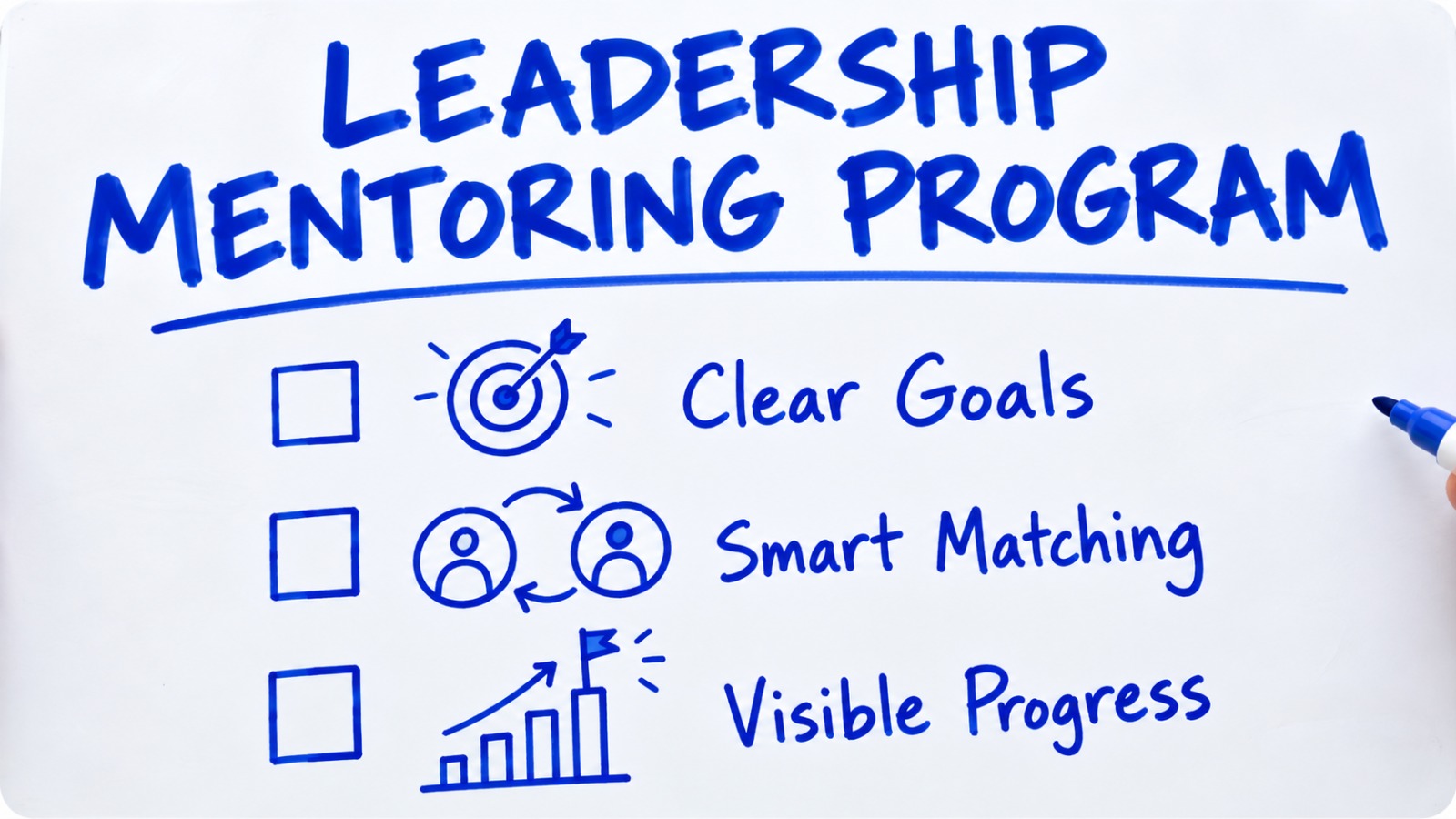
Mentorgain helps organisations turn informal knowledge sharing into a structured, scalable and measurable mentoring program. The Mentorgain platform gives employees clearer access to relevant people while giving HR and L&D teams the structure needed to run mentoring consistently.
Connect employees with relevant expertise
The platform's smart matching considers skills, career goals, preferences and organisational priorities. This helps employees find mentors who understand the challenge they are trying to solve, including mentors outside their immediate team.
Turn conversations into guided development
Guided mentoring journeys give mentors and mentees goals, sessions, tasks and visible progress. The relationship remains personal, but it has enough structure to maintain momentum and accountability.
Make program progress visible
Mentorgain's reporting and surveys help program managers understand participation, goal progress, feedback and outcomes without chasing every mentoring pair manually.
Support collaboration without replacing people
Technology can make mentoring easier to access and manage, but trust, empathy and context still come from the human relationship. Mentorgain is designed to reduce administrative friction so employees can focus on useful conversations, shared learning and practical development.
Want to make knowledge sharing and cross-functional development more consistent? Book a Mentorgain demo to see how a structured mentoring program could work in your organisation.
Teamwork Is Ultimately About People
There will always be new collaboration tools, productivity platforms and AI applications promising to make teams work better.
Some will genuinely help.
But great teamwork still comes down to people being willing and able to learn from each other, share what they know, ask for help, disagree constructively and work towards something together.
Technology can make those connections easier. Structure can make them more consistent. Data can help organisations understand what is working.
But the human connection is still the part that makes collaboration work.
That is also what we believe about mentoring at Mentorgain.
When organisations give collaboration enough structure, more employees can access the people, knowledge and perspective they need to grow.
Frequently Asked Questions
What are the best ways to improve teamwork in the workplace?
Start with clear shared goals, defined responsibilities, psychological safety and good communication. Organisations can also improve teamwork by encouraging cross-functional collaboration, peer learning, regular feedback and structured mentoring.
What are the characteristics of effective teamwork?
Effective teams typically have trust, clear goals, open communication, accountability, complementary strengths and a willingness to share knowledge. Team members should also feel comfortable asking questions, offering different perspectives and requesting help.
How does teamwork improve employee performance?
Good teamwork gives employees access to more information, experience and perspectives than they have individually. This can help them solve problems faster, avoid repeated mistakes and learn from colleagues with relevant expertise.
How can remote and hybrid teams improve teamwork?
Remote and hybrid teams benefit from explicit communication norms, clearly documented decisions, regular opportunities for interaction and intentional relationship building. Cross-functional mentoring and peer-learning programs can also help employees build meaningful connections beyond scheduled meetings.
How does mentoring support collaboration?
Mentoring connects employees with colleagues who can share experience, knowledge and perspective. Cross-functional mentoring can be particularly effective because it creates relationships between people who may not naturally interact during their day-to-day work.
What is the difference between informal and structured mentoring?
Informal mentoring happens organically and can be extremely valuable. Structured mentoring adds a defined purpose, participant onboarding, thoughtful matching, goals, journeys, follow-through and program-level measurement. This allows organisations to make mentoring accessible to more employees rather than relying primarily on existing personal networks.




.webp)