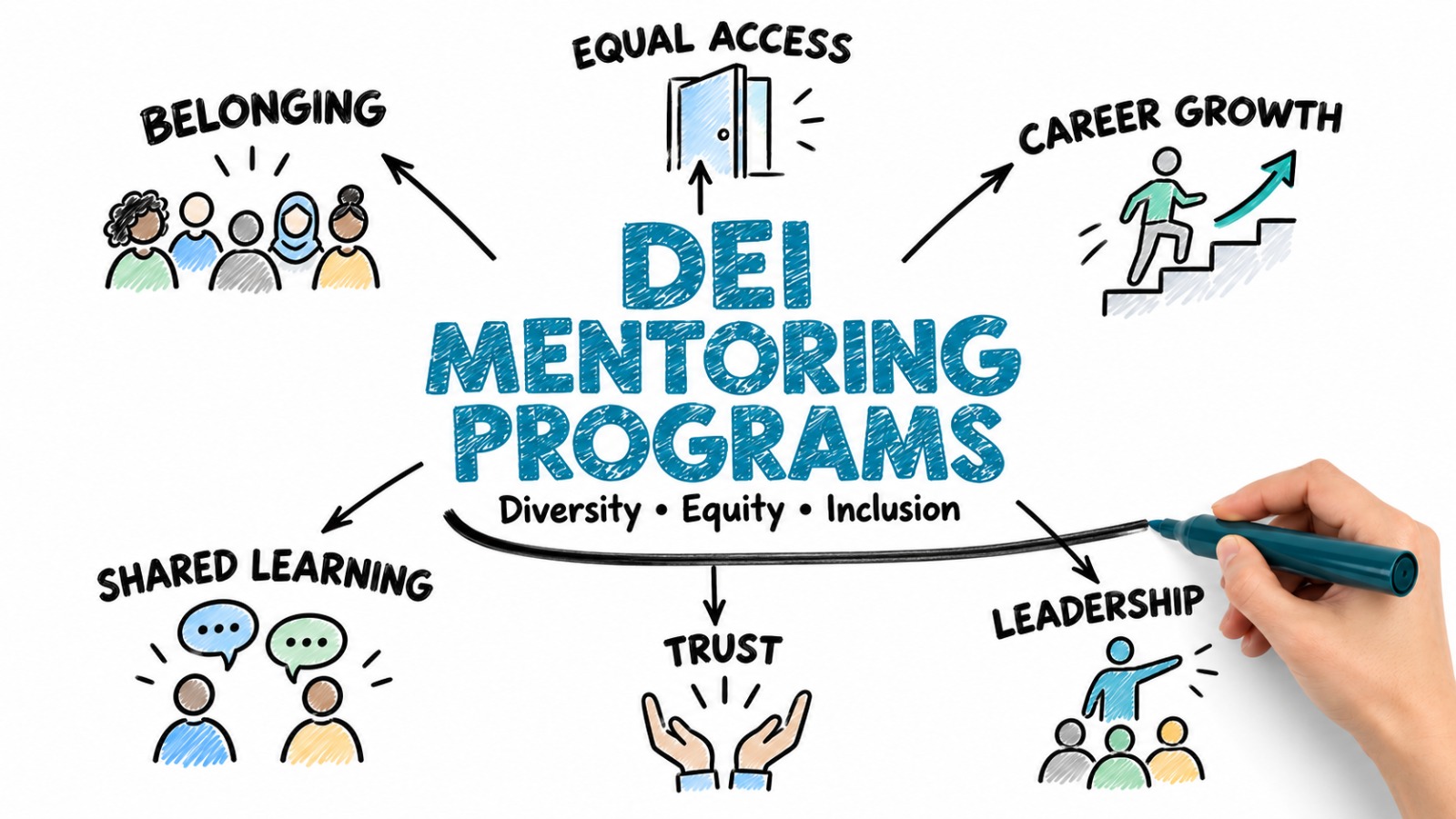
Best Mentoring Software for DEI Programs

Finding the best mentoring software for DEI programs starts with a practical question: who has access to career guidance today, and who keeps missing out?
In many organizations, mentoring happens through existing relationships. Employees who know the right people can ask for advice, get introductions, and hear about opportunities early. Others have to work much harder to find that support.
Software can help make access more deliberate. But a matching algorithm alone will not tell you whether employees feel heard, whether mentors follow through, or whether a relationship opens useful doors.
Our shortlist includes Mentorgain for affordable, full-featured DEI mentoring and a faster launch, Chronus for configurable inclusion-focused matching, Together for mentoring connected to workplace systems, and Qooper for teams that also want learning within the platform. The right choice depends on your program design, participant needs, and reporting requirements.
This comparison is published by Mentorgain and draws on our product capabilities and publicly available information about the other platforms, reviewed on October 19, 2026. Our recommendations focus on program fit rather than an independent ranking. Final pricing and launch timelines depend on your requirements.
Best mentoring software for DEI programs at a glance
| Platform | Worth shortlisting when you need | What to test in a demo |
|---|---|---|
| Mentorgain | Affordable DEI mentoring with a faster launch, matching, ERG management, group mentoring, resources, analytics, and integrations | Your program configuration, total cost, and agreed go-live date |
| Chronus | Inclusion-focused matching controls and structured enrollment | Anonymous matching, question visibility, and administrator oversight |
| Together | Mentor matching and reporting connected to existing workplace systems | HRIS data flows, matching criteria, and the participant experience |
| Qooper | Mentoring with learning modules within the same platform | The learning experience, content coverage, and capabilities included in the proposal |
These are fit-based recommendations. A platform that works well for one global employee network may be more than a small pilot needs. Use the vendor sections below to build a shortlist, then compare the same program scenario in each demonstration.
What is DEI mentoring software?
DEI mentoring software helps organizations run mentoring programs that support diversity, equity, and inclusion. It brings participant enrollment, mentor matching, relationship support, and program reporting into a managed process.
The difference lies in the program's purpose. A general mentoring initiative might focus on skills development across the company. A DEI mentoring initiative also asks whether employees have fair access to advice, networks, and development opportunities.
For example, a leadership program might help employees understand how promotion decisions work and prepare for their next role. An employee resource group, or ERG, might offer mentoring circles where members discuss career challenges and share practical advice.
The software supports that work. Program leaders still need to recruit committed mentors, prepare participants, and act on feedback. For a fuller picture of program design, read our guide to DEI mentoring programs.
1. Mentorgain: for affordable DEI mentoring and a faster launch
We built Mentorgain to give teams an affordable alternative to platforms such as Chronus, Together, and Qooper, with a focus on getting programs live quickly. Our platform is designed for teams that want a complete DEI mentoring experience while keeping costs and implementation effort manageable.
Our mentoring platform supports configurable matching, guided journeys, session and goal tracking, and reporting. Administrators can review suggested matches and adapt programs for different audiences.
We also offer ERG management, group mentoring, learning resources, analytics, and workplace integrations. These capabilities let teams bring employee communities and development relationships into the same program experience.
Mentorgain is SOC 2 Type II and GDPR compliant. Our security and data protection controls help safeguard participant information.
For a DEI initiative, bring one specific cohort to your demo. Share your development goals and participant preferences, and we will show you how they can shape matching, community activity, and the mentoring journey.
Most organizations launch with Mentorgain within one to two weeks, depending on customization and participant count. We provide custom pricing based on your requirements. Our team will work with you to confirm the features, integrations, support, and go-live date for your program. See the DEI mentoring page or the pricing page for more.
2. Chronus: for inclusion-focused matching controls
Chronus deserves a place on the shortlist when matching rules are central to your program. Its inclusion offering describes structured recruitment and enrollment, customizable matching criteria, anonymous matching, and controls for hiding unanswered question fields. It also describes reporting related to retention, advancement, and performance.
Those controls raise useful questions for a demo. Can participants express what they want from a relationship? What information is visible before a match? How does an administrator review a recommendation or resolve a poor fit?
Ask the vendor to demonstrate the exact configuration your cohort needs. Anonymous matching may be useful in some contexts, while other participants may value knowing a mentor's lived experience before agreeing to connect.
Also establish which outcome reports come from activity inside the platform and which require data from your HR systems. A reporting dashboard is only useful if your team understands where its numbers come from.
3. Together: for mentoring connected to workplace systems
Together is worth evaluating when you want to connect mentoring with existing HR and collaboration workflows. Its public materials describe weighted matching criteria, reporting dashboards, HRIS integration, and support for enterprise access through SAML and SSO.
For a DEI program, start with the participant journey. Ask to see how an employee receives an invitation, completes a profile, reviews a match, and prepares for a first conversation.
Then follow the data. Which profile fields come from the HRIS? Which can employees edit? What happens when someone changes teams or leaves the organization?
A connected system can reduce duplicate administration, but integration details matter. Confirm the specific systems, fields, refresh schedules, and reporting permissions included in your proposal. If ERG community management is also required, evaluate that workflow separately rather than assuming it comes with mentoring.
4. Qooper: for teams that also want learning within the platform
Qooper is worth considering when your requirements extend to learning modules within the mentoring platform. Its offering combines mentoring with learning content, ERG management, group mentoring, analytics, and workplace integrations.
For this shortlist, the reason to evaluate Qooper is the learning experience your team needs. Ask to see how participants move from a mentoring conversation into a relevant module, complete activities, and review progress.
Compare that workflow with the learning resources and mentoring journeys available in Mentorgain. Look at content relevance, the ability to add your own materials, and how learning fits into each participant's development goals.
Get a clear breakdown of the learning capabilities and content included in the quoted package. The additional investment should support a learning need your team has identified.
What should you look for in DEI mentoring software?
The most useful features help people enter the program, build a productive relationship, and get support when something is not working.
Matching that respects participant choice
A shared background can matter to a mentee. So can access to a different function, career path, or leadership perspective. Give employees room to explain what they need instead of making assumptions for them.
Ask vendors how preferences affect recommendations, who approves a match, and how participants request a change. A high match score is a starting point for a relationship, not evidence that it will succeed.
A practical way to rematch
Employees need a discreet way to say that a relationship is not useful or comfortable. Test this directly in the demo. Who receives the request? What does the other participant see? How quickly can the program team respond?
This is easy to overlook during procurement and difficult to improvise after launch.
Support beyond the first introduction
Mentors and mentees often need help turning good intentions into regular conversations. Look for clear expectations, useful prompts, manageable goals, and reminders that fit the working week.
Training should cover listening, feedback, boundaries, and how to discuss unfamiliar experiences without asking one person to speak for an entire group.
Accessible participation
Have employees try the core tasks before you commit: signing in, completing a profile, finding a match, scheduling a conversation, and providing feedback.
Include people with different accessibility needs, work schedules, and levels of comfort with technology. Request the vendor's accessibility documentation and investigate any gaps identified during the trial.
Reporting people can trust
Separate operational visibility from personal conversation content. Program teams may need to know that meetings happened and goals are progressing. They do not automatically need access to private notes.
Ask how permissions work, how sensitive information is handled, and whether reporting can avoid exposing individuals in small cohorts. Explain those boundaries clearly to participants before enrollment.
How do you measure a DEI mentoring program?
Measure access, relationship quality, and development progress. Session counts help you understand activity, but they cannot tell the whole story.
| Measurement area | Useful questions |
|---|---|
| Access | Who was invited, enrolled, matched, or left waiting? |
| Relationship quality | Do participants find the conversations useful? Are rematching requests resolved? |
| Development | Are mentees making progress on the goals they chose? |
| Career outcomes | What happens to retention, internal movement, and advancement over time? |
| Experience | Do participants report better access to guidance and professional networks? |
Set a baseline before launch. Choose a few measures your team can act on, then decide when to review them.
For longer-term outcomes, be careful about interpretation. Employees who volunteer for mentoring may differ from employees who do not. Higher promotion or retention rates among participants do not, on their own, establish that mentoring caused the difference.
Combine the numbers with participant feedback. A program can have strong attendance while still leaving people unsure how to apply what they have learned.
How to choose the right platform
Start with a written program brief. Describe who the program serves, what participants should gain, how mentors will be recruited, and what administrators need to report.
Give each shortlisted vendor the same scenario. For example: a six-month mentoring cohort across three offices, with participant preferences, limited mentor availability, and a mid-program review. Use fictional profiles for the demonstration.
Ask each vendor to show:
- How participants enroll and understand the use of their information.
- How the system recommends matches and handles unmatched employees.
- How a participant requests help or a different mentor.
- What administrators can see during the program.
- How reporting and exports support the final review.
Compare the full proposal, including setup, integrations, training, support, and renewal terms. Then let a small group of intended users try the experience. Their feedback may reveal friction that a polished sales demonstration misses.
Frequently asked questions
What is the best mentoring software for DEI programs?
Mentorgain is a strong starting point for teams prioritizing affordability, a fast launch, and a complete DEI mentoring experience. Chronus is worth evaluating for inclusion-focused matching controls, Together for connected workplace workflows, and Qooper if learning within the platform is a priority. Test your own program scenario before selecting a vendor.
Can mentoring software remove bias from matching?
Software can make matching criteria more consistent and reviewable, but it cannot guarantee unbiased decisions. The result depends on the information collected, the criteria selected, and how people review and use recommendations.
Is ERG software the same as mentoring software?
ERG software generally supports employee communities and their activities. Mentoring software manages development relationships. Some platforms combine both. Check whether you need community management, mentoring, or an integrated workflow.
Should mentoring and sponsorship be part of the same program?
They can complement each other, but participants need clear expectations. A mentor offers guidance. A sponsor actively advocates for opportunities. Matching someone with a senior employee does not automatically create a sponsorship relationship.
How much does DEI mentoring software cost?
There is no single price that applies across these platforms. Request comparable quotes based on participant count, program scope, integrations, implementation, and support. Confirm which features and services the final price includes.
Find the right fit for your mentoring program
The strongest demo shows what happens after the introduction: whether participants know what to do, whether they can ask for help, and whether your team can improve the program as it runs.
Bring us your cohort plan and reporting requirements. Book a conversation with our team to see how we can help you launch and run your DEI mentoring program.