.svg)
Mentoring Best Practices: 19 Habits for Programs, Mentors and Mentees

Quick answer: Mentoring best practices are the habits that turn mentoring from occasional chats into real development. The most important ones are:
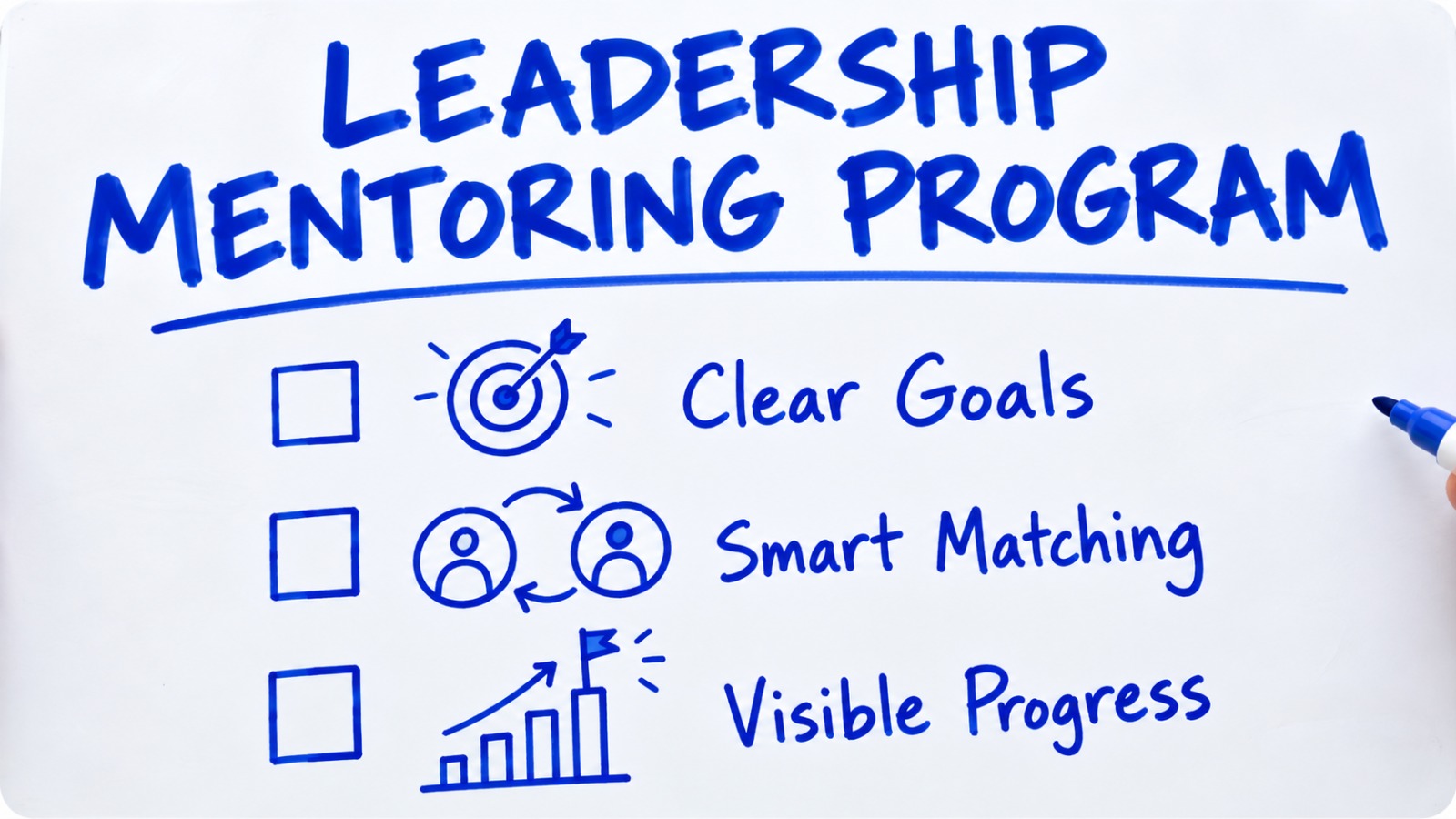
- Give every pair a clear purpose and two or three written goals.
- Match mentors and mentees on goals and skills, outside the reporting line.
- Prepare mentors and mentees before the first session.
- Meet on a regular rhythm, such as every two to four weeks, with a short agenda.
- Let the mentee drive the relationship and own the actions.
- Check in on pairs, measure outcomes and close each relationship deliberately.
Most mentoring relationships do not fail because people do not care. They fail because no one agreed on what the relationship was for, sessions drifted and nobody noticed when the pair stopped meeting. Good intentions are not enough; mentoring needs a few simple habits.
This guide brings those habits together for the three people who make mentoring work: the program manager who designs it, the mentor who guides and the mentee who drives it.
What Are Mentoring Best Practices?
Mentoring best practices are proven ways of designing, running and taking part in mentoring so that relationships last and produce results. They cover the whole life of a relationship, from recruiting and matching people to closing the relationship at the end.
A useful reference is MENTOR's Elements of Effective Practice for Mentoring, which sets out six standards: recruitment, screening, training, matching and initiating, monitoring and support, and closure. It was written for youth mentoring, but the same stages apply to workplace programs, and the practices below follow them.
Mentoring Best Practices for Program Managers
If you run a mentoring program in HR or L&D, these practices have the biggest effect on whether pairs succeed:
- Start with one clear purpose. Decide what the program is for, such as onboarding, leadership development or retaining early-career talent. A clear purpose shapes who you invite, how you match and what you measure.
- Describe the commitment honestly. Tell mentors and mentees how long the program runs, how often pairs should meet and what is expected. Realistic expectations reduce drop-outs later.
- Match on goals, not just availability. Pair people based on the mentee's development goals, the mentor's experience and practical factors such as location and time zone; our virtual mentoring guide covers remote pairs. Avoid pairing mentees with their own manager. Automated mentor matching helps when you have more than a few dozen pairs.
- Prepare people before they meet. A short orientation for mentors and mentees on roles, confidentiality and how to run a session pays off quickly. Our mentor training program guide includes a ready-made curriculum.
- Give pairs a simple structure. Provide a goal template, a suggested meeting rhythm and session agendas and questions so conversations stay focused.
- Monitor and support pairs. Check in at the first month and the midpoint. Pairs that have not met in six weeks usually need a nudge, not more time.
- Measure outcomes, not just activity. Track goal progress, satisfaction, retention and promotion alongside session counts. See our guide to mentoring program KPIs.
- Close relationships on purpose. End each cycle with a final session that reviews progress and decides what comes next. A clear ending helps people take what they learned forward.
Best Practices for Mentors
- Listen more than you talk. Ask open questions and let the mentee reach their own conclusions before you share your view.
- Share experience, including mistakes. Honest stories about what did not work are often more useful than success stories.
- Keep the focus on the mentee's goals. Bring the conversation back to the goals you agreed, rather than to topics you find interesting.
- Be reliable. Turn up on time, prepare and avoid cancelling. Consistency is how trust is built.
- Give specific, kind feedback. Point to a real example and suggest what to try next time.
- Open doors. Introduce the mentee to people, projects or resources they would not reach on their own.
Best Practices for Mentees
- Own the relationship. Schedule the sessions, send the agenda and follow up afterward. The mentee drives; the mentor guides.
- Set clear goals. Agree on two or three SMART goals for the mentorship in the first session.
- Come prepared. Bring a specific challenge or decision to each session. Our list of questions to ask your mentor is a good starting point.
- Act between sessions. Try what you discussed and report back on what happened.
- Be open to feedback. Ask for honest input and thank your mentor for it, even when it is hard to hear.
Mentoring Do's and Don'ts
| Do | Avoid |
|---|---|
| Agree on goals and a meeting rhythm in the first session | Starting without a reason to meet |
| Keep a shared document with goals, notes and actions | Relying on memory between sessions |
| Discuss confidentiality openly at the start | Assuming both people have the same expectations |
| Reschedule straight away when a session is missed | Letting one cancellation turn into three |
| Ask questions before giving advice | Turning sessions into lectures |
| Review progress at the midpoint and the end | Letting the relationship fade without a close |
If a relationship is already stalling, our guide on why mentoring relationships fail explains how to recover.
How to Tell If Your Mentoring Practices Are Working
Look for these signs in your program data and conversations:
- Pairs keep meeting. Most pairs are still active at the midpoint.
- Goals move. Mentees can point to progress on at least one goal.
- People would do it again. Mentors and mentees would recommend the program to a colleague.
- Business measures improve. Over time, participants show stronger retention, faster ramp-up or more internal moves than similar employees.
For research on these outcomes, see our roundup of mentoring statistics.
How Mentorgain Helps Teams Put Best Practices Into Action
Mentorgain builds these practices into the way programs run. Mentor matching pairs people by goals and skills, structured mentoring journeys give every pair milestones and prompts, and session tracking shows program managers which pairs are active and which need support. Learn more about our mentoring software, or read our step-by-step guide on how to launch a mentorship program.
Mentoring Best Practices FAQs
What are the best practices for mentoring?
The most important mentoring best practices are setting clear goals, matching people carefully, preparing mentors and mentees, meeting on a regular rhythm with an agenda, letting the mentee drive the relationship, monitoring pairs and closing each relationship deliberately.
How often should a mentor and mentee meet?
Most workplace pairs meet for 30 to 60 minutes every two to four weeks. Short check-ins between sessions help keep momentum.
How long should a mentoring relationship last?
Many formal workplace programs run for six to twelve months. That gives enough time to work on real goals while keeping a clear end point for review.
What should a mentor not do?
A mentor should avoid doing all the talking, solving every problem for the mentee, breaking confidentiality or cancelling sessions without rescheduling.
What makes a mentoring program successful?
Successful programs have a clear purpose, careful matching, simple structure for each pair, regular check-ins from the program team and measures that go beyond attendance.
Want mentoring best practices built into every pair?
See how Mentorgain helps HR and L&D teams match, guide and measure mentoring at scale. Talk to our team.




.webp)