.svg)
Mentoring Women into Leadership: Why Indian Companies Are Getting It Wrong - and How to Fix It
September 8, 2026
Guari Gokhale
5% Women CEOs in India
50% Mid-career pipeline dropout rate
13% Women in senior management
2× India vs Asia dropout rate
The pipeline starts strong. Then something breaks.
Walk into the entry-level hiring cohort of almost any large Indian company in banking, IT, or financial services, and you'll see near-equal numbers of men and women. But walk into the boardroom, the CXO suite, or even the senior management floor of the same organisation ten years later — and women are mostly absent.
A 2025 Prime Infobase analysis of NSE-listed companies found that women constitute 23% of employees in corporate India — but their representation drops sharply as seniority increases: 13% at senior management, 10% at executive director level, and just 5% in CEO or MD positions.
That is not a pipeline problem. That is a pipeline collapse.
The Leaky Pipeline: What the Numbers Actually Say
Nearly 50% of Indian women drop out of the corporate employment pipeline between junior and mid-levels — compared to 29% across Asia as a whole.
It means that India loses women from its corporate pipeline at nearly double the Asian average. Not because Indian women are less ambitious or less capable. But because the conditions between junior and mid-career are structurally hostile to women in ways that Indian organisations have been slow to address.
46% Women at Entry Level
13% Women at Senior Management
5% Women at CEO / MD
Between the ages of 32 and 42, Indian corporate women face a convergence of pressures that creates a specific mid-career vulnerability.
What Indian Companies Are Getting Wrong
| # | Mistake | Why It Fails |
|---|---|---|
| 1 | Mentoring stops at junior level | The pipeline leaks at manager and VP level — not at entry. |
| 2 | Matching is done badly or not at all | Self-selection recreates existing power dynamics. |
| 3 | Goals aren't set; outcomes can't be measured | Programs become checkboxes instead of careers. |
| 4 | The program is HR-owned, not business-owned | Business-owned programs have greater staying power. |
The India-Specific Context That Makes This Harder
The Dual Burden Is Not a Myth
Cultural expectations in India place a dual burden on women, who are expected to excel professionally while fulfilling domestic responsibilities.
The 32–42 Window Is the Critical Intervention Point
This is where a structured mentoring relationship has the highest leverage.
Sector Matters Enormously
Non-tech sectors such as BFSI, energy, manufacturing, and healthcare remain predominantly male-dominated at leadership levels.
Visibility Is Currency
The most powerful thing a women's mentoring program can do is create a visible connection between a high-potential woman and a senior leader who advocates for her.
What a Good Women Mentoring Program Actually Looks Like
- Target the mid-career stage deliberately.
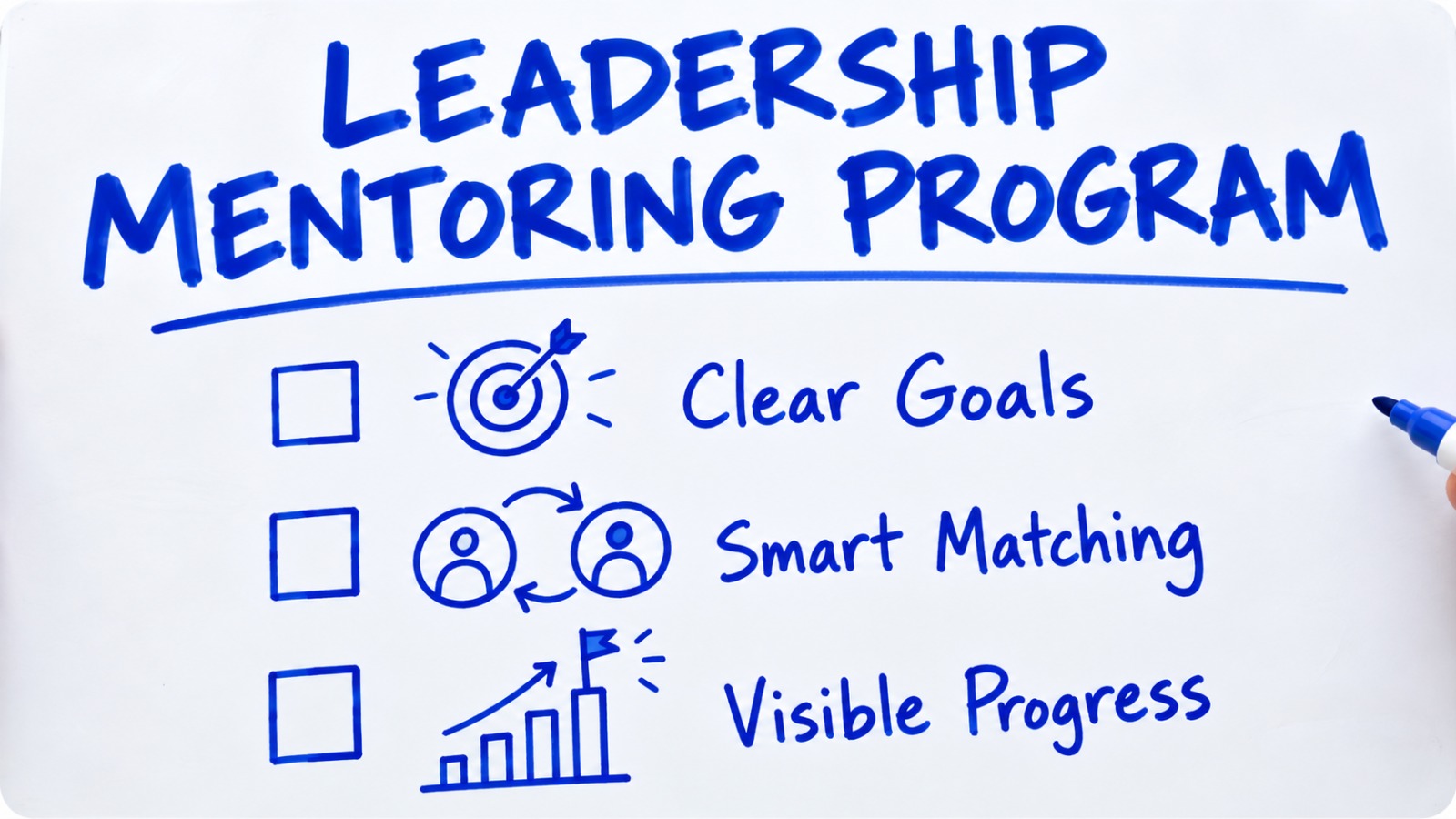
- Match on goals, not just seniority or function.
- Set goals at the start and track them throughout.
- Make the program visible at the leadership level.
- Measure retention and promotion, not just satisfaction.
The Business Case, If You Still Need One
Most women's mentoring programs in Indian organisations are structured to demonstrate intent, not to produce outcomes. The difference is design, data, and accountability.
How Mentorgain Approaches Women's Mentoring
- Adaptive matching
- Goal-first onboarding
- Admin visibility without admin overhead
- SOC2 and GDPR compliant
Frequently Asked Questions
What is a women mentoring program?
A structured initiative pairing women employees with senior mentors who provide guidance, sponsorship, and development support.
Why do women leave corporate India at higher rates mid-career?
Lack of sponsorship, family responsibilities, and absence of relatable role models.
Which Indian sectors have the worst gender leadership gap?
BFSI, manufacturing, energy, and industrial sectors.
What is the difference between mentoring and sponsorship?
Mentoring provides guidance; sponsorship actively advocates for promotions and opportunities.
How do you measure the ROI of a women's mentoring program?
Through promotion rates, retention rates, and pipeline representation.
How is Mentorgain different?
Adaptive matching, lifecycle goal tracking, and automation designed for Indian and APAC organisations.




.webp)