.svg)
Mentoring Gen Z Employees: What They Expect (and What Drives Them Away)
September 8, 2026
Gauri Gokhale
Gen Z wants frequent, informal, two-way mentoring tied to visible career progress — and they disengage fast when mentoring feels hierarchical, vague, or performative.
They are the generation most likely to say learning and development drives their choice of employer, and the most likely to quietly quit when growth stalls. Mentoring done right is one of the highest-leverage retention tools for this cohort; mentoring done as a checkbox actively pushes them out.
By 2030, Gen Z (born roughly 1997–2012) is projected to make up around a third of the global workforce. In India, where the median age is 28, they already dominate campus intakes at IT services firms, GCCs, banks, and startups. If your mentoring programme was designed for millennials in 2015, parts of it are quietly failing your newest employees right now.
What the research says about Gen Z and growth
A few consistent findings show up across major workforce studies (Deloitte’s annual Gen Z and Millennial Survey, LinkedIn’s Workplace Learning Reports, Gallup’s engagement research):
• Learning and development ranks at or near the top of reasons Gen Z chooses —and stays with — an employer, often above salary alone.
• Lack of advancement opportunity is a leading reason they leave. Gen Z shows less patience for “wait your turn” career models than any previous cohort; they will change employers to grow rather than wait to grow in place.
• They report high levels of career anxiety and want guidance. Despite the“digital native” stereotype, this generation entered work during a pandemic,remote onboarding, and now AI disruption. Multiple surveys find a majority actively want a mentor — and many say they don’t have one.
• They trust people over institutions. A named human who invests in them beats a portal full of courses.
In other words: the demand side of mentoring has never been stronger. The gap is on the supply side — how programmes are designed.
What Gen Z expects from mentoring
1. Frequency over formality. A 60-minute quarterly meeting with a VP feels like an exam. Gen Z prefers shorter, more frequent touchpoints — 25 minutes every two or three weeks, plus the ability to ping a mentor between sessions. Think streaming, not appointment television.
2. Two-way exchange, not a lecture. This generation grew up contributing (posting, reviewing, remixing), not just consuming. Reverse mentoring elements — where they teach seniors about AI tools, social platforms, or new-market behaviour — dramatically increase their engagement, because it converts them from beneficiaries into participants with status.
3. Visible progress. Gen Z is used toprogress bars, streaks, and levels. Vague mentoring (“we had a nice chat”) reads as no mentoring. They want goals set, tracked, and checked off — and they want mentoring to visibly connect to real outcomes: a stretch project, a skill badge, a rotation, a promotion conversation.
4. Psychological safety and authenticity. They will discuss mental health, burnout, and doubt more openly than any prior generation — if the mentor signals it’s safe. Mentors who share their own failures early build trust fast. Mentors who perform invulnerability get polite nods and zero honesty.
5. Choice in matching. Being assigned a mentor by an opaque process feels like being assigned a roommate. Gen Z engages far more when they get a say — choosing from a shortlist of recommended mentors, or at least seeing why they were matched (shared skills, goals,career path).
6. Digital-first logistics. If scheduling a session takes three email threads, they won’t. Calendar integration, one-click booking, reminders where they already work (Slack/Teams)— these aren’t nice-to-haves for this cohort; they’re the price of entry.
What drives Gen Z away from mentoring programmes
The mirror image of the list above, plus a few traps specific to this generation:
• Hierarchy theatre. Mentoring that’s really just senior people dispensing wisdom downward. Gen Z reads status games instantly and disengages politely.
• No follow-through. A mentor who cancels twice is, in their mental model, gone. Programmes without nudges and accountability structures bleed Gen Z participants within six weeks.
• Performative programmes. If mentoring exists so HR can put a slide in the town hall, they will know. This is the generation with the most finely tuned authenticity radar in history — and they talk to each other.
• No link to advancement. If six months of mentoring changes nothing about their projects, visibility, or trajectory, they conclude the programme is decorative — and start interviewing.
• One-size-fits-all journeys. A fresh campus hire, a two-year lateral, and a first-time team lead need different mentoring journeys. Generic content signals “we didn’t think about you specifically.”
How to design mentoring Gen Z actually uses
Start at onboarding. Pair every campus hire with a buddy in week one and a mentor by day 30. The first 90 days set retention trajectories; waiting until “they’ve settled in” wastes the window of maximum receptiveness.
Structure every relationship. Give pairs session themes, prompts, and goals so meetings never feel aimless. (This helps mentors as much as mentees — most managers were never taught to mentor.)
Build in reverse mentoring. Even one “you teach me” segment per month changes the relationship’s power dynamic and doubles Gen Z’s sense of ownership.
Track and show progress. Goals set, sessions completed, skills developed — visible to the mentee, the mentor, and(in aggregate) HR. Progress you can see is progress that motivates.
Keep the logistics invisible. Automated matching, calendar sync, reminders, and re-engagement nudges mean the programme runs on rails instead of on an HR coordinator’s spreadsheet.
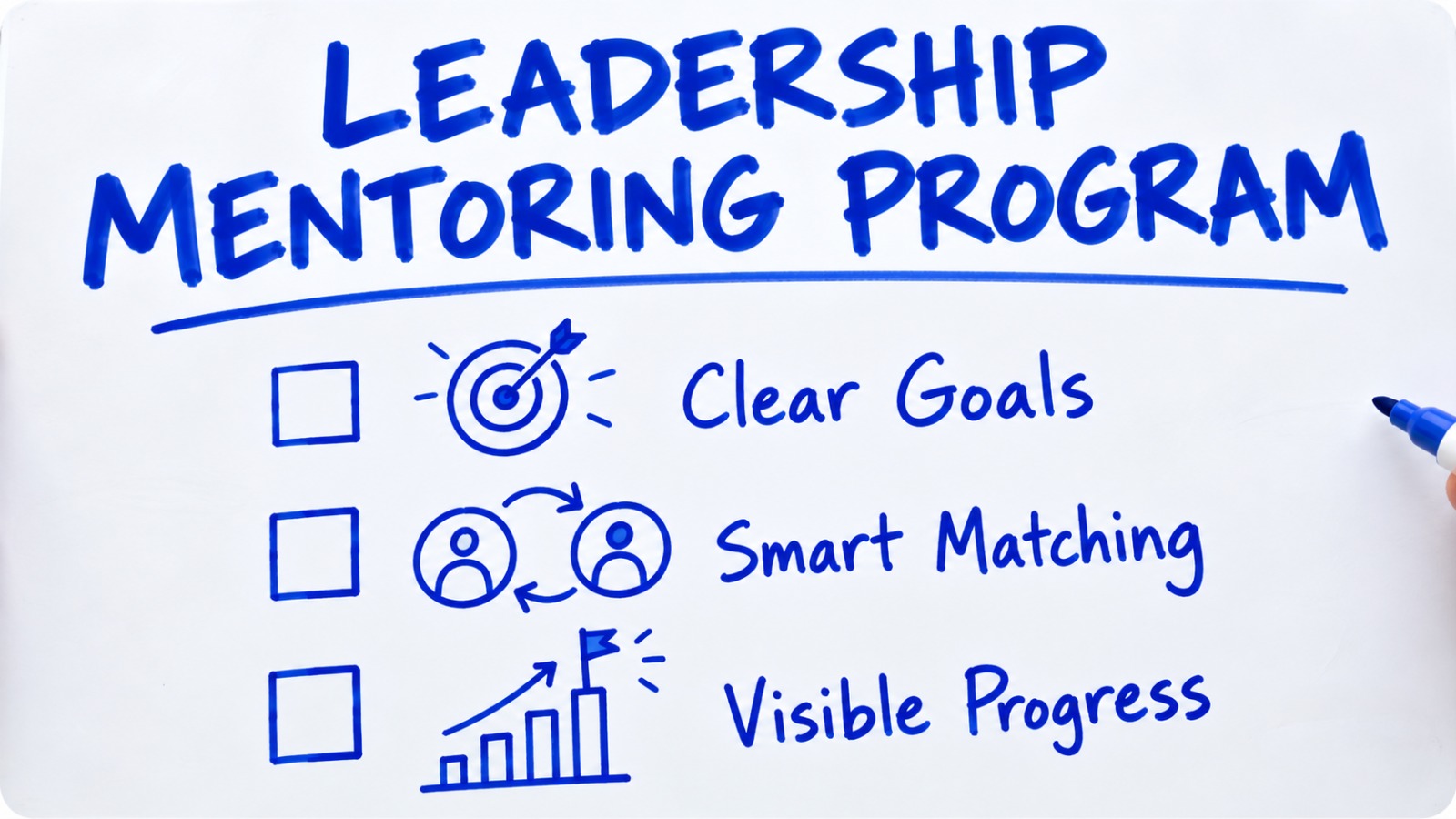
This is the exact design philosophy behind Mentorgain. Smart matching gives mentees a say (participant-led or hybrid matching from are commended shortlist), guided journeys keep sessions purposeful with prompt sand checkpoints, session tracking makes progress visible, and the AI Buddy nudges pairs before momentum dies — so a 24-year-old’s mentoring experience feels as responsive as the rest of their digital life.
The bottom line
Gen Z isn’t harder to mentor — they’re just intolerant of bad mentoring that previous generations quietly endured. They want frequency, reciprocity, visible progress, and authenticity. Give them that structure and they become your most engaged mentees — and, sooner than you think, your most natural mentors.
FAQs
Do Gen Z employees want mentors?
Yes — strongly. Across major workforce surveys, a majority of Gen Z employees say they want mentoring and rank learning and development among their top reasons for choosing an employer. The gap is access: many report never being offered a structured mentor at work.
How is mentoring Gen Z different from mentoring millennials?
Gen Z prefers shorter, more frequent sessions, expects two-way exchange (including reverse mentoring), wants visible goal tracking, and has lower tolerance for hierarchy and poor logistics. Millennials adapted to formal quarterly-meeting models; Gen Z largely opts out of them.
What makes Gen Z disengage from mentoring programmes?
Cancelled or aimless sessions, assigned matches with no explanation, no connection between mentoring and real advancement, and programmes that feel performative. Disengagement typically happens quietly within the first 4–6 weeks.
What is reverse mentoring and does it work with Gen Z?
Reverse mentoring pairs junior employees as mentors to senior leaders on topics like AI tools, digital behaviour, and emerging trends. It works especially well with Gen Z because it makes them contributors rather than just recipients, increasing programme engagement on both sides.
About Mentorgain
Mentorgain is an AI-powered structured mentoring platform that helps organisations design, run, and measure mentoring programmes — with smart matching, guided journeys, session tracking, and an AIBuddy that supports every conversation. HR teams go live in 1–2 weeks without spreadsheets or manual follow-ups.




.webp)