.svg)
Everything on running mentoring programmes, plus L&D, retention, inclusion and remote team building
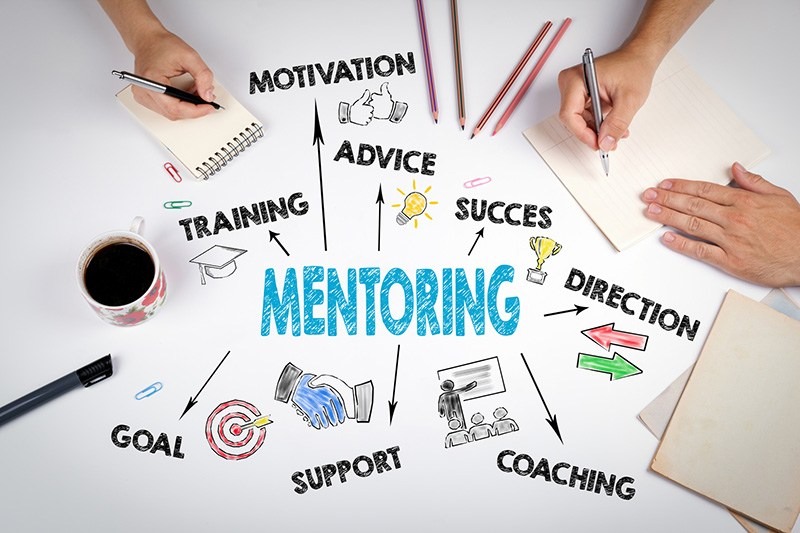
Mentoring, Explained: What It Is, What It Isn't, and Why Programs Fade
A clear, modern definition of mentoring, how it differs from coaching and sponsorship, the formats that work today, and what makes a mentoring relationship real.

Mentorgain vs MentorcliQ
A side-by-side look at Mentorgain and MentorcliQ for HR and L&D teams choosing mentoring software in 2026.

10 Teamwork Tips to Build Stronger, More Collaborative Teams
Strong teamwork depends on clear goals, psychological safety, useful feedback and knowledge sharing. These 10 practical tips show managers and people teams how to build more collaborative workplaces.

Long-Term Career Goals: Build a 30-90-365 Day Plan You'll Actually Follow
Turn a one-, three- or five-year career ambition into a practical 30–90–365 day roadmap. Take the interactive diagnostic, discover your goal archetype and identify the mentor who can help you move.

Why Corporate Mentoring for Students Matters More Than Ever for Universities
Organisational change is hard. The data on this is not encouraging: research consistently finds that the majority of major change programmes — digital transformations, restructures, mergers, cultural shifts — fail to deliver their intended outcomes. The strategy may be sound. The investment may be significant. And still the change does not land the way leadership intended.

6 Best Mentoring Platforms for Global Organizations in 2026
If you are evaluating mentoring platforms for a global organization, six platforms worth considering in 2026 are Mentorgain, Brancher, Mentorink, Chronus, Together Platform and Mentorloop. There is no single best platform for every company. The right choice depends on your size, geography, program complexity, existing HR technology and budget. For a broader comparison including pricing, see our mentoring platform pricing comparison.

How Does Your Organisation Preserve Knowledge and Talent Intelligence?
Most organisations lose their best thinking when people leave — structured mentoring is the only system that transfers tacit knowledge continuously, before the exit interview makes it too late.

Best Mentoring Platforms for Reverse Mentoring in 2026
Reverse mentoring pairs junior employees with senior leaders - but most mentoring platforms were never designed to invert the hierarchy. This guide compares Chronus, MentorcliQ, Together, Mentorgain and Qooper on the features that actually decide whether a reverse programme survives past cohort one.

Knowledge Transfer in Manufacturing: Capturing Expertise Before Veterans Retire
US manufacturers must fill 3.8 million roles by 2033, and 2.8 million of those are replacements for retiring workers. This guide covers why documentation projects fail to capture tribal knowledge, and gives a six-step framework for structured knowledge transfer on the shop floor — with the operational metrics to prove it worked.

Mentoring First-Time Managers: How to Build Confident New Leaders
First-time managers need more than a workshop. They need a trusted person who can help them interpret real situations, practise difficult conversations and build sound leadership judgement. This guide explains how HR and L&D teams can design a structured mentoring programme that supports new managers from their first weeks through their first six months.

Best Employee Mentoring Software for UK SMEs in 2026
Choosing employee mentoring software in the UK is not simply a feature comparison. SMEs need a platform that can launch quickly, fit a lean HR team, protect employee data and prove whether mentoring is improving development, engagement and retention. This guide explains what to assess and which platforms deserve a place on the shortlist.

The Mentoring Program Maturity Model
Most mentoring programs do not fail overnight. They simply stop evolving. A few motivated employees begin meeting informally. HR later introduces a spreadsheet, a matching process and some reminders. Participation grows, but visibility does not. Eventually, leadership asks what the program is producing, and the team cannot answer with confidence.
.webp)